After the buffet, we visited Walmart, the great and evil megacorporation. Walmart is, by many metrics, the biggest company in the world, with revenues of 351 billion and a profit of 11. It's a chain of giant supermarkets where absolutely everything is sold. It is evil because it uses questionable business practices, or in our terms — shady ways of doing business. I'll cite some examples if you're too lazy to click the link: union suppression and busting, hiring illegal immigrants and exploiting them to the fullest in the US, semi-slave labor of kids and adults in factories in manufacturing countries, disregard for the environment, and pressuring suppliers, who are forced to sell their goods at extremely low prices or not sell them in the chain at all. Walmart also likes to flaunt its Christian origins, and based on that, censors the CDs and magazines sold there. In terms of size, Walmarts are usually like several football fields. Building one in a region massively bankrupts small shops and factories. The people working at Walmart are usually Black and Latino, often illegals. As a rule, they are poorly trained and can't help a customer. Americans know all about this — the more conscious ones try to avoid shopping at Walmart, but faced with the threat of a declining standard of living, Walmart's exploitation of slaves somehow fades into the background.

"The high cost of low prices"
Now for the good stuff — at least from the consumer's point of view, which an American always is deep down inside. Prices are very low, there's at least some selection, you can buy anything — food, clothing, electronics, medicine. I bought swimming shorts, jeans for $5, a bottle of 300 vitamins, shorts and jeans, as well as a Gillette Fusion razor with five blades, which I had wanted to try for a long time. Curiously, you can take a maximum of 6 items into the fitting room — why exactly this number is unclear.
In case anyone is still not in the loop, regular swimming briefs in America are worn only by gays or cheeky playboys.
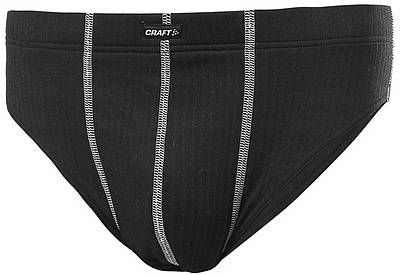
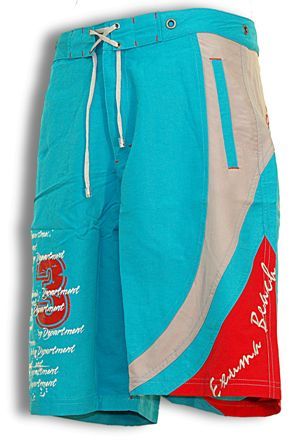
Regular swimming briefs on the left and swimming shorts on the right


If you don't want to be considered as such, you'll have to wear knee-length "family swimming trunks". The American mentality eats into even our fellow citizens who have lived in the US. For instance, one regular Russian word describing a certain type of people causes a nervous tic in those around you and a desire to look around in panic. It looks so funny that I even borrowed a special term from "Harry Potter" — "Those Who Must Not Be Named". No wonder — if you name them, they'll run up and smash you with a baseball bat. It's not for nothing that the neighborhoods where these comrades live are considered bad and apartments there cost less.
At Walmart I came across another funny thing — the color differentiation of pants. But not in the sense we are used to understanding this term, but in a more prosaic one. The hangers that clothes hang on are marked with size tags. But these tags are different colors, depending on the size. This is, without a doubt, genius and extremely convenient. Too bad my XL size is somehow encountered less often than the rest.
It also wasn't without slogans. The humorous "Always Low Prices, Always" ( "Always low prices, always") with a touch of Down syndrome was used for the previous 19 years, but is still hanging in many places. With the onset of the financial crunch in the US, it was replaced by "Save Money Live Better", which is "Save money and live better". Can't say it's fresh, but it's always relevant.

"I shop, therefore I am"
Since we're on the subject, we can't avoid talking about the consumer society. Since we are sort of in Europe, and I've been to Germany, I thought I understood perfectly well what it was all about. But only after visiting the US did I "realize the full depth of the enterprise", © the band "Center". For the city of Madison, with a population of 300 thousand people, there are at least 9 huge supermarkets, each one several times bigger than any of the ones in Daugavpils. This isn't counting the many other specialized stores and an almost infinite number of restaurants. Which, by the way, is what any food service establishment is called in the US, from McDonalds-style fast food joints to serious establishments.
Americans, of course, buy a lot. But it's not that easy to explain, considering the following facts. An unskilled worker earns only $6-8 an hour before taxes. In our country, people love to daydream about how great life is abroad, and to criticize our prices and salaries. There's a grain of truth in that, but don't succumb to the illusion that every Western country is surrounded by the Garden of Eden, with rivers of milk and banks of pudding. $8 an hour is only 400-500 lats a month. Now imagine that food prices are the same as ours, services are one and a half to two times higher, and apartments are simply exorbitant, especially by Daugavpils standards. Doesn't seem like such a paradise anymore, right? True, the vast majority of Americans still earn more, but according to my rough calculations, 800-1000 lats is already considered a fairly good salary. You can earn that much only if you have some kind of education or the desire to bust your ass at a factory.

US National Debt
I don't claim any scientific rigor or even adequacy for my reasoning and calculations, but the kingdom of consumption can only be explained by the fact that there are also quite a few rich people, and they have the means to indulge their tastes. And for the poor, there are endless loans. In case you didn't know, the debts of US citizens amount to 9 trillion dollars and are constantly growing. 22% of this amount is external debt to other countries. Meaning, it's not just individuals living in debt, but the whole country, and has been for many years. There's no need to be surprised or panic — the modern economy is so complex that it's impossible to say for sure whether this is good or bad. What's funny, though, is that America exploits the whole world with its own money.

12-pack
In the US, everything is not only bright and plastered with slogans, but also big. Americans love "savings", hence the gigantic package sizes. A regular carton of juice is over 2 liters, soda is sold in a 12-pack, meaning sets of 12 aluminum cans. The packaging of various goods rarely seen in our country, which sports the label "Economical", would cause a healthy laugh from an American. Economical means the size of half a car trunk, and the trunks here are large. The biggest tub of ice cream I've seen in Latvia was 3 liters, and even then, only in Riga. In the US, gigantic buckets of ice cream of 5 or more liters are the norm. The average shopper leaves the store with a shopping cart full of groceries, or even two. It's hard to say how justified this even is. After all, it's clear that a significant portion of what was bought won't be eaten in time/won't be wanted and will subsequently be thrown away. In addition, if you buy less, you'll eat less, which only benefits you personally.